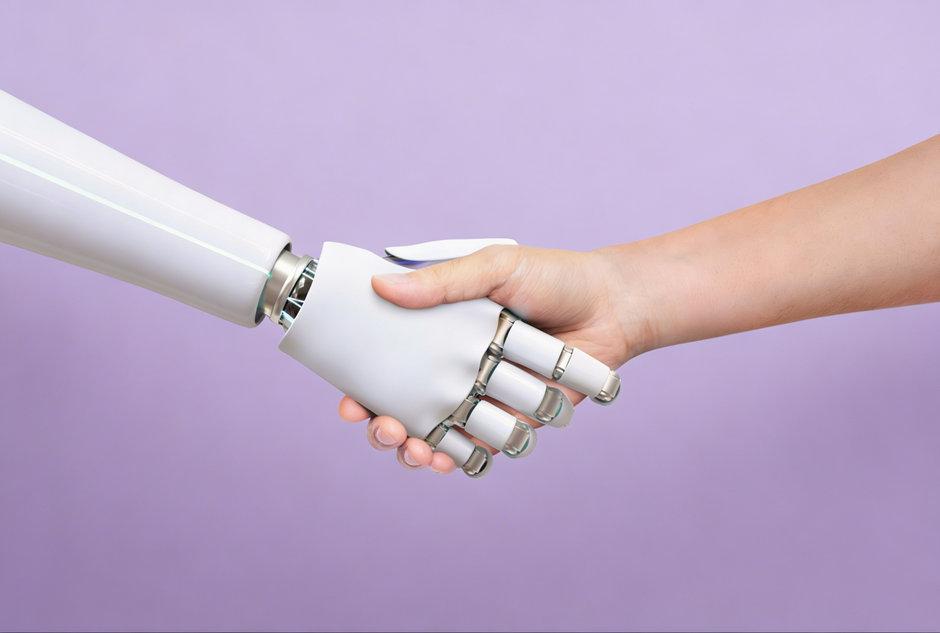
AI won’t replace medical coders. It replaces repetitive mistakes.
Healthcare organizations today are under increasing pressure to improve revenue cycle performance while maintaining compliance with complex coding guidelines. At the center of this challenge is medical coding, which translates clinical documentation into standardized codes used for billing, reimbursement, analytics, and regulatory reporting.
However, many healthcare organizations and revenue cycle management (RCM) teams still rely on manual, high-volume coding workflows that are prone to small but costly errors.
AI in medical coding is emerging as a powerful solution—not by replacing coders, but by helping them reduce repetitive errors, improve accuracy, and work more efficiently.
What Is AI in Medical Coding?
AI in medical coding refers to the use of artificial intelligence to analyze clinical documentation and recommend accurate ICD-10 and CPT codes.
These systems use technologies such as natural language processing (NLP) and machine learning to:
- Review clinical notes in real time
- Identify missing or incomplete documentation
- Suggest appropriate diagnosis and procedure codes
- Validate coding against payer rules
The goal is not to replace coders, but to augment their expertise and reduce manual effort.
Can AI Replace Medical Coders?
No, AI cannot replace medical coders.
While AI can automate repetitive tasks and identify patterns in clinical data, medical coding requires:
- Clinical judgment
- Knowledge of coding guidelines
- Interpretation of complex documentation
- Compliance oversight
- Clinical judgment
AI acts as an assistant, helping coders work faster and more accurately—but human expertise remains essential.
The Scale of Medical Coding Errors in Healthcare
Medical coding errors are more common than many organizations realize.
Industry estimates suggest that 10–20% of healthcare claims contain coding inaccuracies, contributing to:
- Claim denials
- Delayed reimbursements
- Revenue leakage
- Increased administrative costs
- Claim denials
Even small, repetitive errors across thousands of encounters can result in significant financial impact.
Common Medical Coding Errors in Healthcare
In high-volume environments, even experienced coders can make mistakes. These are typically not due to lack of expertise, but due to workflow complexity and cognitive load.
Missed Secondary Diagnoses
Clinical documentation often includes multiple comorbidities such as diabetes, hypertension, or obesity.
Under time pressure, coders may capture only the primary diagnosis.
Example:
- Documentation: Type 2 diabetes with neuropathy
- Incorrect coding: E11.9 (without complications)
- Correct coding: E11.40 (with neuropathy)
Modifier Errors
Modifiers are frequently missed or incorrectly applied.
Common issues include:
- Missing modifier -50 for bilateral procedures
- Missing modifier -59 for distinct procedures
- Confusion between -26 (professional) and -TC (technical)
CPT and ICD Code Mismatch
Diagnosis codes must support the medical necessity of procedures.
When they don’t align:
- Claims may be denied
- Payers may reject services under LCD/NCD rules
Missed Charge Capture Opportunities
Certain billable services may be documented but not coded.
Examples include:
- Sedation services
- Ultrasound guidance
- Additional imaging views
Documentation Review Fatigue
Coders often review:
- Clinical notes
- Operative reports
- Radiology findings
- Lab results
- Addendums
How AI in Medical Coding Reduces Errors
AI is particularly effective in eliminating repetitive, pattern-based mistakes that occur in manual workflows.
Why Human Coders Are Still Essential
Despite advances in AI, human coders remain critical to the coding process.
Clinical Judgment
Coders interpret ambiguous or incomplete documentation and apply clinical context.
Quality Assurance
Human review ensures
AI-generated recommendations are accurate and compliant.
Training AI Systems
Coders provide feedback that continuously improves AI performance.
Compliance Oversight
Coding must align with evolving regulations, payer policies, and guidelines.
AI enhances coders—it does not replace them.
The Evolving Role of the Medical Coder
As AI becomes more integrated into coding workflows, the role of the coder is shifting toward higher-value work.
Coders will increasingly focus on:
- Complex cases
- Clinical documentation improvement (CDI)
- Denial analysis
- Compliance auditing
- AI supervision
- Complex cases
This shift allows coders to operate at a more strategic level within the revenue cycle.
Best Practices to Reduce Medical Coding Errors
Healthcare organizations can reduce coding errors by:
- Improving clinical documentation quality
- Implementing CDI programs
- Using AI-assisted coding tools
- Strengthening coder-clinician collaboration
- Monitoring coding quality metrics
- Improving clinical documentation quality
Combining process improvements with AI technology delivers the best outcomes.
How Billient Helps Improve Medical Coding Accuracy
Billient.AI helps healthcare organizations reduce coding errors and improve revenue cycle performance through AI-powered automation.
Key capabilities include:
- Real-time clinical documentation analysis
- Accurate ICD-10 and CPT code recommendations
- Payer rule validation
- Revenue leakage detection
- Continuous learning from coding patterns
- Real-time clinical documentation analysis
By combining AI with human expertise, Billient enables organizations to:
- Reduce claim denials
- Improve coding accuracy
- Increase reimbursement
- Enhance operational efficiency
- Reduce claim denials
The Future of AI in Medical Coding
The future of medical coding is not about replacing humans with machines—it’s about collaboration between AI and coders.
AI brings:
- Speed
- Automation
- Pattern recognition
- Speed
Human coders bring:
- Clinical understanding
- Judgment
- Compliance expertise
- Clinical understanding
Together, they create a coding workflow that is:
- More accurate
- More efficient
- More scalable
- More accurate
Frequently Asked Questions (FAQ)
What is AI in medical coding?
AI in medical coding uses artificial intelligence to analyze clinical documentation and recommend accurate diagnosis and procedure codes, improving coding efficiency and accuracy.
Will AI replace medical coders?
No. AI supports coders by automating repetitive tasks, but human expertise is required for clinical judgment, compliance, and complex decision-making.
How does AI reduce medical coding errors?
AI reduces errors by scanning documentation, identifying missing details, validating coding against payer rules, and suggesting accurate codes in real time.
What are the most common medical coding errors?
Common errors include missed diagnoses, incorrect modifiers, CPT–ICD mismatches, and incomplete documentation.

“The AI tool ensures greater accuracy, flags potential errors before claims go out, and keeps us compliant with evolving payer rules."
Tonya M, Project Manager, RCM Company
- Tags :
- AI
- Compliance
- Medical Coding